

Every so often, a little bit of filing turns into something rather more interesting than expected.
Recently, while looking through some of our archives at Hearing Healthcare Practice, we came across a document written by our founder, Robert Beiny. It was created around 15 years ago, before many of the national and international awards and recognitions that would later follow.
At the time, it was simply one of several documents setting out the thinking behind the practice. Yet, reading it now, it feels remarkably clear, relevant and forward-looking.
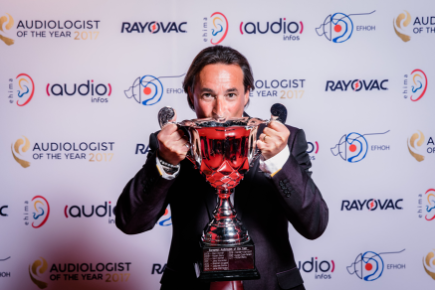
It captures an approach to hearing care that helped shaped the practice and has guided us ever since. It also helps explain why Hearing Healthcare Practice in Harpenden has gone on to achieve such exceptional recognition, including three UK Audiologist of the Year awards and two European Audiologist of the Year awards.
Most importantly, it helps explain why so many patients have found the care they receive here to be genuinely life-changing.
A More Complete View of Hearing Care
The document begins with a clear idea. Hearing care should never revolve around one device, one test or one narrow solution.
Robert wrote that Hearing Healthcare Practice’s holistic approach “doesn’t revolve around one facet or a particular device but focuses on an all-encompassing experience for our clients.”
That included people with normal hearing, reduced hearing capacity, tinnitus or specialist requirements for hearing protection.
This is still central to the way we work today.
Hearing care is not only about wether someone can hear a beep in a test. It is about communication, confidence, family life, professional life, safety, listening effort, social ease and emotional wellbeing.
It is about the whole person.
Why Technology Alone Is Never Enough
One of the strongest points in Robert’s original document was his challenge to the idea that technology alone can solve every hearing problem.
He compared hearing technology to a computer. A computer needs an operating system and the right software to work properly for the person using it.
He also compared hearing technology to a violin. In the hands of a virtuoso, a violin can sound extraordinary. In the wrong hands, it can sound very different.
The same is true of hearing aids.
Even the most advanced hearing technology can sound poor, uncomfortable or ineffective if it is not selected, fitted and programmed with real expertise.
That idea has become even more important today. Modern hearing aids can be remarkable. However, the best results depend on far more than the device itself.
They depend on accurate assessment, skilled programming, careful listening, follow-up care, counselling, adaptation and trust.
A Personalised Road Map for Every Patient
Robert also wrote that there is “no magic pill or simple device” that works for everyone.
That remains one of the most important truths in audiology.
Every patient brings a different set of needs. Some people are managing gradual hearing loss. Some are dealing with tinnitus. Some have complex listening needs at work. Others need hearing protection for music, industry, shooting, motorsport or other noisy environments.
Some people are anxious about hearing aids. Some have already tried them elsewhere and been disappointed. Some simply want to understand what is happening to their hearing before making any decisions.
That is why we believe every client needs a bespoke treatment plan. In Robert’s original words, this becomes a ‘road map’ to addressing their problems.
A good treatment plan should be practical, personal and realistic. It should explain what can be done, what may take time and what support is available along the way.
Looking Beyond the Ear…
Another striking part of the original document is its focus on the wider impact of hearing loss.
Robert wrote about combining global clinical and technical best practice with breakthrough research into the emotional, psychological, psychosocial and cognitive effects of hearing loss.
That was a deeply important point then. It is even more widely understood now.
Hearing difficulties can affect confidence, relationships, work, independence and wellbeing. They can make busy restaurants exhausting. They can make meetings harder. They can make family conversations feel frustrating. They can leave people feeling left out, even when they are surrounded by others.
Good hearing care must recognise this.
It must not treat hearing as an isolated technical issue. It must understand how hearing shapes daily life.
Who Needs Better Hearing Care?
Robert’s original document set out several groups of people the practice wanted to educate and support.
That included people with hearing difficulties who were living with a challenging communication disability.
It also included people with complex hearing issues, people beginning to notice disruption in their professional, social or private lives, people unaware of the risks of noise exposure and people with tinnitus who had been told that nothing could be done.
These groups remain just as important today.
Some people come to us because they know they have hearing loss. Others come because they are not quite sure what has changed, but they know that conversations feel harder than they used to.
Some come because tinnitus has become intrusive. Others come because they want proper hearing protection before damage is done.
Whatever the reason, the starting point is always the same. We listen…
Making Hearing Tests a Normal Part of Life
One of the clearest ambitions in the document was to “put hearing tests on the map”.
Robert wanted hearing checks to be seen as a normal part of life, just like eye tests or dental checks.
That is still a message we believe strongly.
Many people have regular eye tests. Many see a dentist as a matter of routine. Yet hearing is often ignored until a problem becomes difficult to live with.
We would like that to change.
Your hearing affects how you connect with people, enjoy music, follow conversation, work confidently and stay aware of the world around you.
It deserves care, attention and regular checks.
A Philosophy That Has Stood the Test of Time
Looking back at Robert’s document, what stands out most is not that it predicted future awards. It is that it described a way of caring for people that has remained consistent.
The awards that followed were important. They recognised skill, dedication and exceptional patient outcomes. Yet they were also a reflection of something deeper.
They reflected an ethos.
Hearing Healthcare Practice has always believed that audiology should be modern, expert, personal and compassionate. It should be clinically excellent without feeling cold. It should embrace technology without pretending that technology alone is enough.
It should help people hear better, live better and feel more like themselves again.
Fifteen years later, that belief still guides everything we do.
Book a Hearing Assessment in Harpenden
If you are finding conversations harder, noticing changes in your hearing or struggling with tinnitus, we are here to help.
At Hearing Healthcare Practice in Harpenden, we offer expert hearing assessments, hearing aid fitting, tinnitus support and specialist hearing protection.
To book an appointment, please contact Hearing Healthcare Practice on 01582 767218 or contact us HERE.
FAQs
Why is hearing care about more than hearing aids?
Hearing care is about the whole person, not just the device. A hearing aid must be carefully selected, fitted and programmed to suit the individual. Good care also considers confidence, communication, work, family life, tinnitus, listening effort and emotional wellbeing.
Why should I have a hearing test?
A hearing test helps you understand what is happening to your hearing. It can identify hearing loss, listening difficulties or other issues that may need support. Many people wait too long before seeking help. A regular hearing check can give useful reassurance and help you act early.
Can hearing aids sound bad if they are not fitted properly?
Yes. Even excellent hearing aids can feel uncomfortable or sound poor if they are not programmed accurately. The skill of the audiologist is vital. Hearing technology works best when it is fitted with care, clinical knowledge and an understanding of the person’s daily listening needs.
Can tinnitus be supported?
Yes. While tinnitus is not always something that can be removed completely, many people can be helped. Tinnitus support may include assessment, advice, sound therapy, hearing technology where appropriate and practical strategies to reduce its impact on daily life.
Why choose Hearing Healthcare Practice in Harpenden?
Hearing Healthcare Practice offers expert, personal hearing care built around each patient’s needs. The practice has a long-standing holistic approach, led by founder Robert Beiny, who has won UK Audiologist of the Year three times and European Audiologist of the Year twice.
About the Author
Robert Beiny, Founder and Director of Audiology
Robert Beiny is the founder of Hearing Healthcare Practice in Harpenden. He has been recognised with three UK Audiologist of the Year awards and two European Audiologist of the Year awards. His approach combines clinical expertise, advanced hearing technology and a deep understanding of the personal impact of hearing loss.