

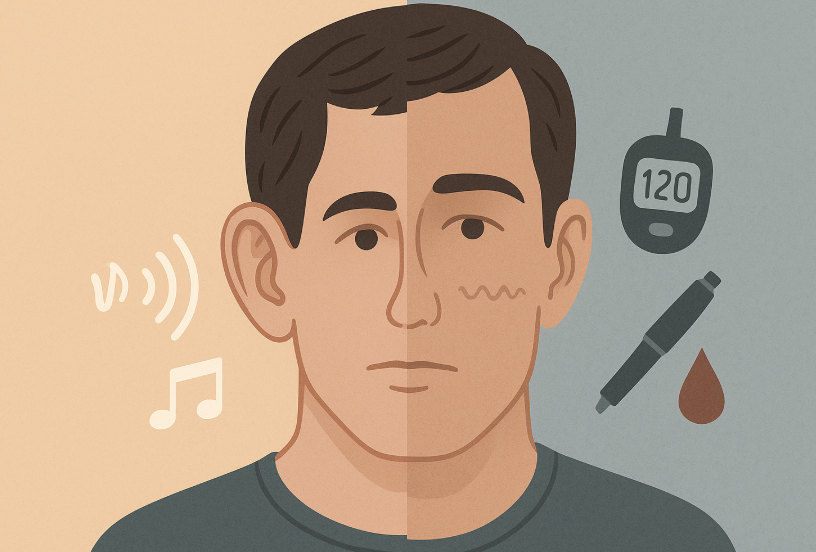
… And Why It Matters for Your Brain Health.
If you have diabetes, you already know how important it is to manage your blood sugar and protect your heart, eyes, and kidneys. But did you know your hearing could also be at risk? And, as we’ve discussed many times in these updates, hearing loss can also affect how your brain works, thinks and processes.
At Hearing Healthcare Practice, we’ve experience of how hearing, diabetes, and memory are all connected, and what you can do to stay sharp, connected, and well.
The Link Between Diabetes and Hearing Loss
Why?
It’s thought that high blood sugar levels can damage the tiny blood vessels and nerves endings in your inner ear, in much the same way they affect your eyes or kidneys. Over time, this can reduce your ability to hear clearly, especially softer, high-pitched sounds.
A recent medical review found that people with diabetes are up to 30% more likely to have hearing loss. The risk increases if diabetes is poorly controlled or has lasted many years.
What’s Hearing Got to Do With Memory?
We now know that hearing loss and memory loss are closely linked. In fact, researchers report studies show that untreated hearing loss can increase the risk of developing dementia by up to 50%. (If you search within our News Stories you’ll find details of several relevant research studies).
That’s because when hearing becomes difficult, your brain has to work harder just to follow conversations, leaving fewer mental resources for memory and thinking. This added strain, combined with possible social withdrawal due to poor hearing, can accelerate cognitive decline.
The World Health Organisation and the Alzheimer’s Society have even listed hearing loss as one of the top modifiable risk factors for dementia. In other words: it’s something we can do something about.
Hearing Aids Can Help More Than You Think
Here’s the good news: using hearing aids doesn’t just help you hear better — they may also protect how your brain works.
Recent studies show that people who wear hearing aids are less likely to develop dementia compared to those who don’t, especially if they start using them early. One large study in 2023 even found that hearing aid users had almost half the cognitive decline of those who left their hearing loss untreated.
If you have diabetes, looking after your hearing is even more important. Many people don’t realise they’ve lost some hearing, especially if it has happened gradually over time.
What You Can Do Now
At Hearing Healthcare Practice, we believe in early support, expert care and long-term wellbeing. Here’s how you can take action:
1. Book a hearing check-up – especially if you have diabetes.
Even mild hearing loss can make life harder and impact your brain health. We can test your hearing and offer practical, friendly advice.
2. If you’ve noticed changes in your hearing, don’t wait.
Modern hearing aids are discreet, powerful and can make a huge difference, not just for your hearing but for your memory, mood, and overall confidence.
3. Support your brain by staying connected.
Clear hearing helps you stay socially engaged,and that’s one of the best ways to keep your mind active and healthy.
We’re Here to Help
Whether you’re managing diabetes, looking after a loved one, or simply want to protect your future health, we’re here to guide you every step of the way.
At Hearing Healthcare Practice, we don’t just check your ears , we look at the whole picture, the whole person and their lifestyle. Better hearing means better living.
Did You Know?
- People with diabetes are 30% more likely to develop hearing loss.
- Hearing loss can raise dementia risk by 50%.
- Hearing aids can reduce cognitive decline by nearly half.
Visit us at our award-winning Harpenden clinic or call us to arrange a hearing health check or click HERE to book an appointment.